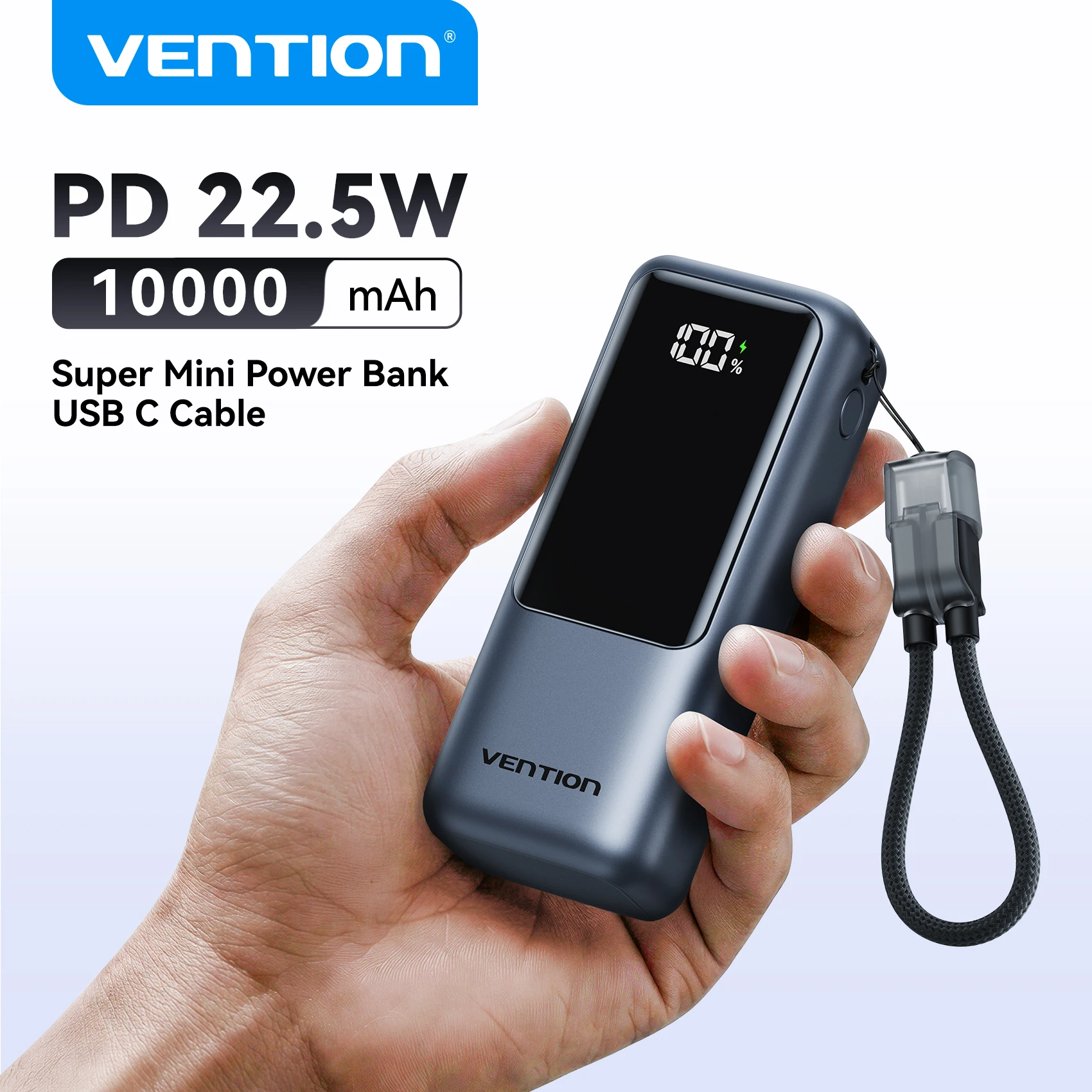
Power bank capacity looks simple, but the number on the box is not what your phone receives. This guide shows how to work out how many mAh you need, and why a 10,000 mAh power bank never gives 10,000 mAh to your phone.
Use our Power Finder on the home page for a quick answer, or follow the steps below.
mAh, Wh and the 3.7V trick
The mAh rating is measured at the internal cell voltage, about 3.7V. To compare units fairly, convert to watt-hours: Wh = mAh x 3.7 / 1000. So 10,000 mAh is about 37Wh, 20,000 mAh is about 74Wh and 27,000 mAh is about 100Wh.
Your phone charges at a higher voltage, so energy is converted and some is lost as heat.
Real usable capacity
Plan on roughly 60% to 70% of the rated capacity reaching your device. A 10,000 mAh unit gives about 6,000 to 7,000 mAh. Divide that by your phone's battery (4,000 to 5,000 mAh for most) to get the number of charges.
Examples by device
A phone with a 4,500 mAh battery gets about 1.4 charges from a 10,000 mAh power bank and about 2.9 from 20,000 mAh. A tablet with a 9,000 mAh battery needs a 20,000 mAh unit for about one and a half charges. A laptop with a 50Wh battery needs more than 20,000 mAh for a full charge.
Capacity versus weight
Every extra 5,000 mAh adds roughly 100 g. Buying more than you need means carrying more weight every day. Choose capacity for your longest typical day, not for the worst case once a year.
Capacity and airline limits
Most airlines allow up to 100Wh per power bank in hand luggage, which is about 27,000 mAh. Anything above that needs airline approval or is not allowed. Read our airline guide before you travel.
Frequently asked questions常見問題
Is 20,000 mAh too much for a phone?
It is a lot for a daily commute but ideal for travel, hiking or sharing with a friend.
Why does my power bank not give the full charge?
Because of voltage conversion and heat losses, only 60% to 70% of the rated capacity reaches the phone.
How do I convert mAh to Wh?
Multiply mAh by 3.7 and divide by 1000. For example, 20,000 mAh x 3.7 / 1000 is 74Wh.